
Customer satisfaction metrics help you understand what customers feel, why they feel that way, and where your team should look next.
Imagine a customer gives you five stars but leaves no comment. It feels positive, but it still leaves you guessing: Was the service fast? Was the staff helpful? Was the process easy?
Then another customer writes, "It was fine,” which somehow feels worse than a 3-star review.
That’s the challenge with customer feedback. A score or rating can point you in a certain direction, but it rarely gives you the whole story on its own. CSAT, NPS, CES, reviews, and written feedback each tell you something different about the customer experience.
When used well, those metrics give your team more than just a number to track. They help you understand when customers are satisfied, where they’re struggling, and whether a small change could make the next experience better.
Before we get into the different types of customer satisfaction metrics, let’s start with what they actually measure.
What Are Customer Satisfaction Metrics?
Customer satisfaction metrics are ways to measure how customers feel about your business, service, product, or support experience.
Some metrics measure one specific moment, like a support call, appointment, purchase, class, or event. Others help you understand a broader relationship, like whether someone feels loyal to your brand or would recommend you to someone else.
That matters because customer satisfaction is not one single feeling. A customer may love your support team but find your billing process confusing. Someone may be happy with your service but frustrated by the onboarding process. Another customer may leave a five-star review but never book again.
Customer satisfaction metrics help you separate those signals, so your team knows what to look at next.
The Main Types of Customer Satisfaction Metrics
Different customer satisfaction metrics answer different questions. The goal is not to collect every possible metric. It’s to choose the one that matches the moment.
Customer Satisfaction Score
Customer Satisfaction Score, or CSAT, helps you understand how satisfied a customer was with a specific experience.
Use CSAT when you want feedback on one clear moment, like a support ticket, appointment, purchase, class, event, or service visit.
A simple CSAT question might ask:
How satisfied were you with your experience today?
You can use a number scale, star rating, smiley scale, or answer options like “very satisfied” to “very dissatisfied.”
CSAT is useful because it keeps feedback tied to a real experience while it’s still fresh. If someone had a confusing appointment, a poor support call, or a frustrating purchase process, your team can identify the issue sooner and know where to look.
Net Promoter Score
Net Promoter Score, or NPS, looks at the customer relationship to your business. Think “brand loyalty.”
Instead of asking how someone felt about one moment, NPS asks how likely they are to recommend your business to someone else.
A common NPS question is:
How likely are you to recommend us to a friend or colleague?
Customers usually answer on a scale from zero to ten.
NPS can help you understand overall loyalty and brand perception. It’s useful for relationship check-ins, especially when you want to know how customers feel about your business as a whole.
Like any of these metrics, NPS should not be treated as the whole story. Someone might recommend your business but still feel frustrated by one part of your process. They might also like your service but not be the kind of person who recommends businesses often.
Customer Effort Score
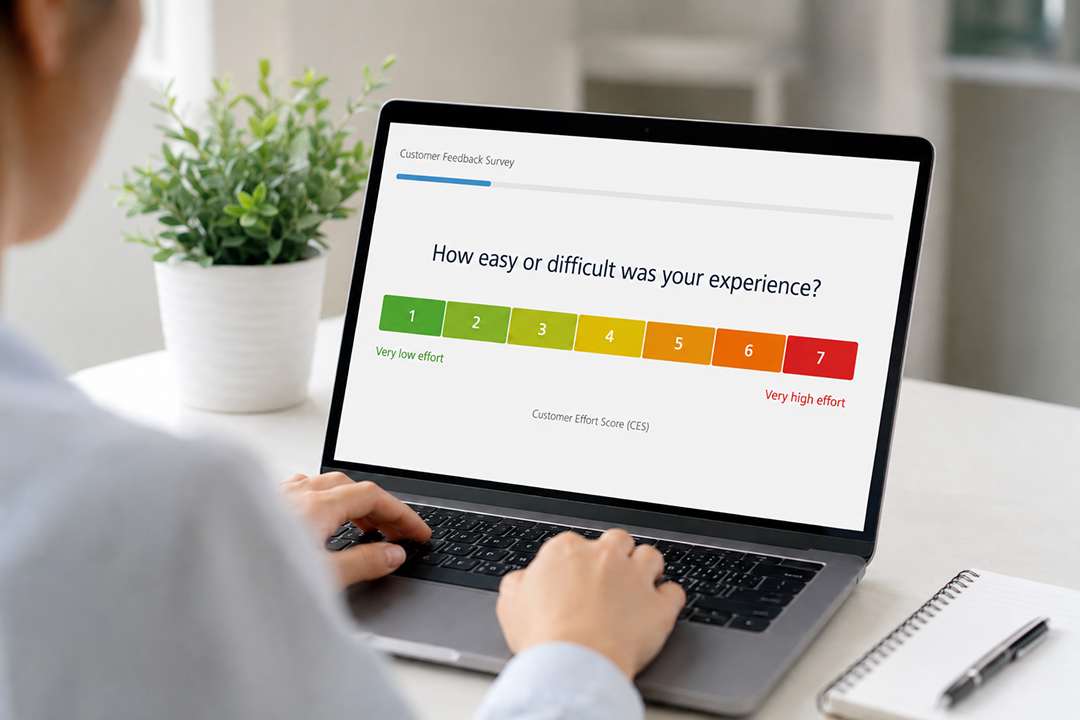
Customer Effort Score, or CES, helps you understand how easy or hard it was for a customer to complete a task.
That task might be getting help, submitting a form, uploading a document, scheduling an appointment, completing onboarding, or checking out online.
A simple CES question might ask:
How easy was it to get the help you needed?
CES is useful because customers remember friction. They remember when they had to repeat information, wait too long, fill out something confusing, or contact support more than once.
If customers say something was challenging in their experience, that gives your team a clear place to focus on and simplify. CES is especially helpful for improving processes, not just measuring satisfaction.
Written Feedback
Written feedback is where a score starts to become more useful.
A score tells you how someone felt. A written comment explains what shaped that experience.
For example, a customer may give a low score because the wait was too long, a form was confusing, the price was unclear, the support answer did not solve the problem, or the next step was not explained.
Without that comment, your team may know something went wrong but not know what caused it.
A simple written feedback question could be:
What is the main reason for your rating?
Or:
What would make your experience better next time?
Written feedback is especially helpful when paired with CSAT, NPS, or CES. It gives your team the context behind the metric.
Reviews and ratings can still be useful, especially after a service, purchase, appointment, or visit. But they work best as supporting signals. People are often more likely to leave a review when they feel strongly, so ratings alone may not reflect the full customer experience.
Pair ratings with a written follow-up when you can. That gives your team the score and the reason behind it.
When to Ask for Customer Satisfaction Feedback
Timing can change the quality of the feedback you receive. Ask too soon, and the customer may not know how they feel yet. Ask too late, and the details may not be fresh enough to give you a useful answer.
In most cases, ask close to the time of the experience you want to measure. That way, the feedback is tied to a specific moment and easier for your team to understand.
Good feedback moments include:
- After support, onboarding, or checkout.
- After an appointment, class, event, or purchase.
- After a document is submitted or a project milestone is reached.
- After a renewal, cancellation, or other major decision.
The question should match the feedback your team is looking for. After support, ask if the issue was solved. After onboarding, ask if the process felt easy. After a cancellation, ask what led to the decision.
You don’t need to ask everything at once. Start with the question that matters most, then give customers a simple way to explain their answer.
Why Customer Satisfaction Metrics Matter
Customer satisfaction metrics give your team a clearer way to understand the customer experience. Instead of relying on scattered comments, one-off reviews, or gut feelings, it gives you a way to collect feedback in a more consistent, reliable format.
That consistency makes it easier to:
- Spot patterns across customers.
- Compare feedback over time.
- Identify areas of friction in specific processes.
- Understand why customers are happy or unhappy.
- Follow up when someone needs help.
- Improve the experience before small problems become bigger ones.
The most useful feedback does more than tell you whether a customer was satisfied. It helps you understand what happened, where it happened, and what your team should do next.
That’s why customer satisfaction metrics are most helpful when they’re tied to a clear process. Your team should know what you’re measuring, when you’re asking, and how the answers will be reviewed.
Customer Satisfaction Tracking Tips
Customer satisfaction tracking is simple to start. You create a form, choose the metric that matches what you need to learn, and ask customers for feedback at the right moment.
A few small checks go a long way in making your feedback form easier for customers to complete and easier for your team to use:
- Questions that are too vague, too long, or confusing.
- Surveys that ask too many questions at once.
- Feedback requests sent too late, after the customer has forgotten the details.
- The wrong metric for the moment, like asking for NPS after one support ticket.
- Scores without a written follow-up, which leaves your team guessing.
- Average scores that hide patterns by product, service, team, or location.
- Feedback with no follow-up plan, especially when someone leaves a low score or asks to be contacted.
Build Customer Satisfaction Forms with Cognito Forms
Customer satisfaction metrics are easier to trust when the feedback is clear, consistent, and organized from the start. The right metric tells you what to measure; the right form helps you collect it the same way every time.
With Cognito Forms, you can start with a template and choose the fields that fit the feedback you need, from satisfaction scores to written follow-up questions. Each response is collected in one place, so your team can find the feedback later, compare results across experiences, and focus on the changes that will make the biggest difference.

Miranda Peterson
Miranda is a Marketing Specialist at Cognito Forms who loves turning complex ideas into content that’s clear, helpful, and human. Outside of work, you can find Miranda enjoying local coffee shops, spending time in nature with her husband and two children, reading on her Kindle, or cooking for a group of friends.