Adult Medical Consent Form
Collect an adult patient's consent to treatment, with a separate signature path for a legal guardian, health care agent, or surrogate when the patient can't consent for themselves.
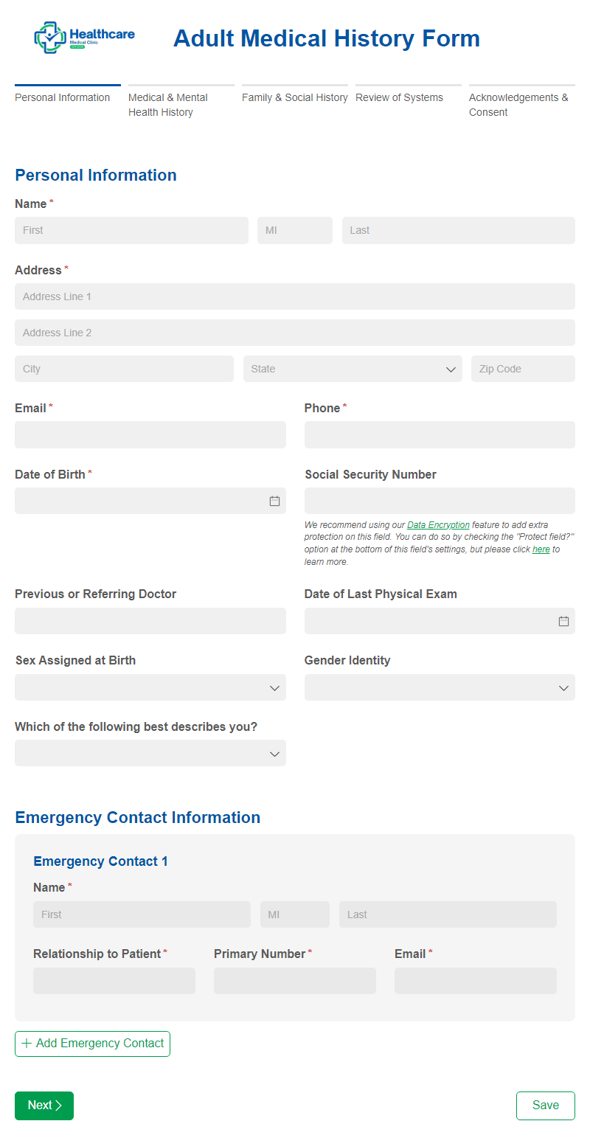
Use this Medical Consent Form Template to collect an adult patient’s consent to examinations, evaluations, and routine treatment before care begins. Patients review your consent, withdrawal, and financial policies, then provide their name, date of birth, and contact details.
The form asks whether patients can consent for themselves. If so, they sign electronically. If not, conditional logic displays a separate signature section for a legal guardian, health care agent, or surrogate, who also provides their relationship to the patient.
When an adult cannot consent for themselves, the signer must have legal authority to make health care decisions on their behalf, such as through a health care power of attorney or court-appointed guardianship, under the HIPAA Privacy Rule’s personal representative guidance. State law determines who has that authority and whether a family member or other surrogate may consent, so confirm your state’s rules with a qualified professional.
If you collect this form under HIPAA, you’ll need the Cognito Forms Enterprise plan and a signed Business Associate Agreement (BAA). You can also turn on Encrypt Data Entry for sensitive fields, such as date of birth.
Customize the form for your practice by adding your clinic’s name to the financial consent policy, adding a file upload field for a copy of the health care power of attorney, or setting up an email notification to alert front-desk staff when a new consent is submitted. For minors, use the Child Medical Consent Form. For consent to a specific procedure, use the Informed Consent Form.
Frequently Asked Questions
Someone with legal authority to make health care decisions for the patient, such as a health care agent named in a power of attorney or a court-appointed guardian. Whether a family member can sign as a surrogate depends on state law, and the form asks every signer to choose their role and enter their relationship to the patient.
No. This template records general consent to routine examinations, evaluations, and treatment. For a specific procedure, use a separate Informed Consent Form that names the procedure and its risks.
Yes. Share it as a link or embed it on your practice’s website, and patients can read the policies and sign from their phone before they arrive.
Patients complete the form online, and you can use Document Generation to save each signed entry as a PDF for the patient’s chart or print it.