
A strong legal intake process helps law firms collect the right information, make better decisions, and move the right inquiries forward.
This guide covers best practices for building a legal intake workflow, including roles and responsibilities, intake stages, statuses, question sets, security, and reporting. Use it to review your current process and find ways to improve.
Clear Intake Roles and Responsibilities
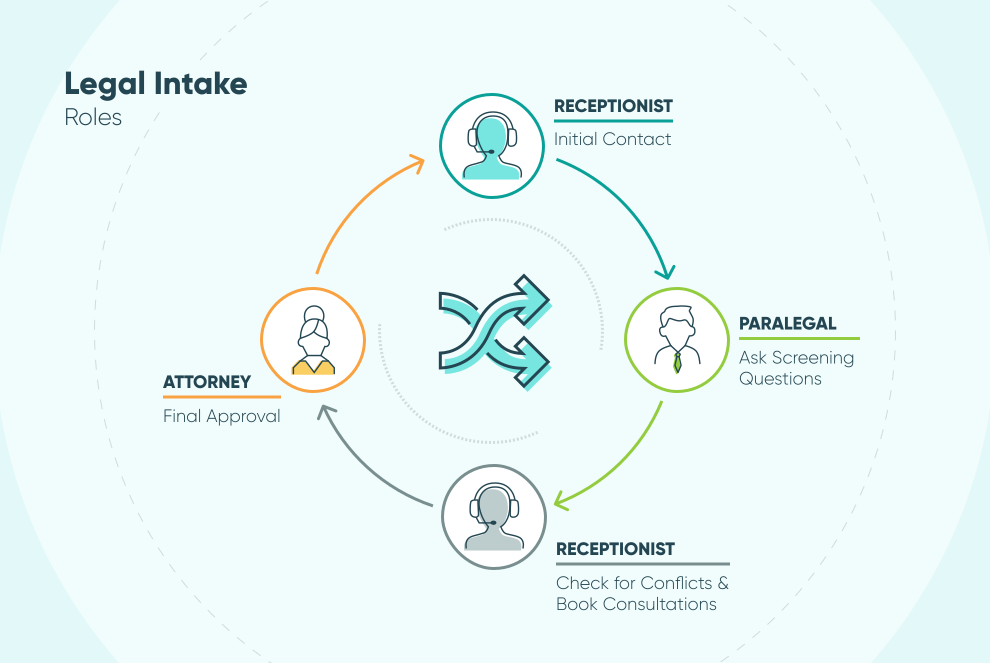
Teams work more efficiently when roles and responsibilities are clearly defined. In a legal intake process, different people step in at different stages. Establishing clear responsibilities helps create a consistent workflow that aligns with your practice area and intake needs.
Roles
It is common for firms to have multiple people involved during intake. Receptionists, marketing or sales staff, paralegals, and attorneys may all be involved. Each role should have clear responsibilities. For example, one person may handle the initial contact, another may ask screening questions, and an attorney may review whether the client should move forward. Clear ownership helps the team avoid confusion and ensures intake doesn’t depend on whoever happens to be available.

Hiring and training
When intake starts to overwhelm every role, it usually means the process needs clearer ownership, better tools, or both. If intake is pulling attorneys and paralegals away from their main work, it may be time to assign clear ownership of the early stages or add a dedicated intake role.
This often makes sense when attorneys spend too much pre-screening, paralegals handle lead inquiries instead of billable work, or follow-up starts to fall behind. A person dedicated to intake would handle the early steps, such as asking screening questions, collecting basic information, following up with leads, and passing along qualified inquiries for review.
Whether this is a new hire or a designated current employee, they need the right training. They should know your firm’s scope, understand what types of clients and legal issues are a fit, and know when to involve an attorney. They should also know how to ask clear questions, show empathy, protect confidential information, and keep the process moving.
Without training, poorly fit inquiries can go to the next stages of intake, wasting time and resources. A script, a set list of intake questions, and clear escalation rules can help them do this every time.
Defined Intake Process Every Firm Can Follow
Once roles are clear, the next step is to write down your intake process. Many intake problems happen when a team knows who is involved but does not know what happens at each stage. A better intake process is one that your team can follow the same way every time.
Start by writing out the full path from the first inquiry to a signed client for your firm. Keep it simple. List each stage in order, who owns it, and what should happen next. Include what happens when an inquiry moves forward, when more information is needed, and when the firm decides it’s not a fit.
Core stages of the legal intake process
Each firm and practice area will have its own intake process, but most follow the same core stages. Start with these steps, then adjust them to fit your firm.
Inquiry
Inquiries may come in by phone, online form, email, or referral. At this stage, collect basic information and create a record for the lead. If the inquiry comes in by phone, gather the key details and enter them into your system. Then move to the next step in your intake process.
Preliminary screening
After the inquiry comes in, gather enough information to decide if the potential client is a fit. This may happen through an intake call, form, or both. Ask questions about the issue, the timeline, the parties involved, the location, and how urgent the situation is. Collect any documents needed for review.
Conflict check
Once you have the basic details, run a conflict check before spending more time on the inquiry. Start by asking the potential client to complete a conflict check form. Then, verify that your firm has no conflicts with opposing parties or others connected to the matter. This helps your firm avoid moving too far along when the inquiry is not a good fit. The exact process may differ by firm, but it should happen early and follow the same steps each time.
Consultation decision
After screening and conflict review, decide what happens next. The inquiry may move to a consultation with an assigned attorney, stay on hold while you gather more information, be referred out, or be declined.
Consultation scheduling
If the inquiry appears to be a fit, schedule the consultation with the right attorney. If your firm charges a consultation fee, collect it at this stage so the next step is clear for both the team and the potential client.
Consultation and fact gathering
During the consultation, the attorney gets the full story, reviews documents, identifies deadlines or risks, and learns more about the client’s goals and expectations.
Evaluation and engagement decision
After the consultation, the attorney decides whether to represent the client. This decision may depend on fit, merits, workload, timing, jurisdiction, and ethical concerns. If the firm moves forward, send the engagement letter and fee agreement. If not, send a non-engagement letter or referral information, depending on your process.
Onboarding
Once the client is accepted, onboarding begins. At this stage, the firm collects signatures, payment details, fee agreements, and any remaining documents, then creates a matter or case in its case management system.
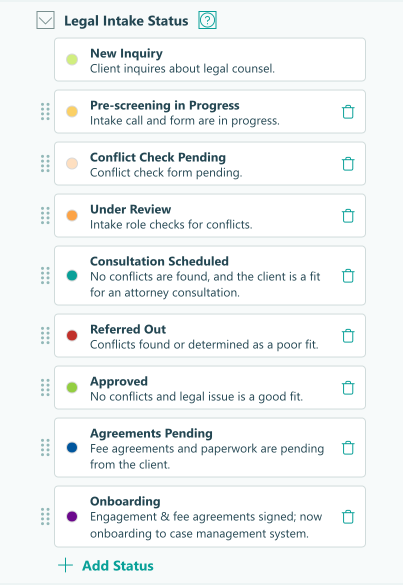
Once the stages are defined, the next step is to track each lead and their status as they move through your intake process.
Use statuses in your database to track each lead
Statuses help your team visualize where each lead stands and what should happen next. They make intake easier to follow, manage, and measure over time.
Your status names may vary, but they should match the stages in your process.
For example, your firm may use statuses like:
Questions and Intake Standardization
Once your intake stages are defined, the next step is to decide which questions to ask during the pre-screening/intake call. The quality of those questions matters. If they are too broad, inconsistent, or based on memory, it becomes harder to collect useful information to decide whether to move forward with the potential client.
A good intake form or call script should help your firm answer four basic questions:
- Who is this person?
- Is there a conflict?
- What is the legal issue?
- Is this a potential client the firm can and wants to take on?
Core questions every firm should ask
The exact wording and questions will vary by practice area, but most firms should ask questions that help intake specialists understand the basics of the legal issue and whether it is a good or poor fit. These often include:
- Provide a description of your needs
- Is this urgent?
- Which practice area best fits your case?
- Where did it happen?
- Who is involved?
- What outcome are you hoping for?
- Do you have a preferred attorney?
- Are you aware of any relationship between you or your case and any of our current or former employees?
- Have you worked in the past or are you currently working with another attorney at any firm?
Other useful questions may include how the prospect found your firm, whether they have documents related to their issue or inquiry, and how they prefer to be contacted.
Standardization
The goal is not to make every intake identical, but to ensure that your team asks the right questions in a consistent way at the right time. Most firms need one core set of intake or pre-screening questions for every prospect. More detailed, practice area-specific questionnaires are also needed for the consultation stage. Intake questions for family law will look different from intake for personal injury, estate planning, or employment law, and the consultation questions may vary even more.
"Because Cognito Forms is digital, it connects with the other software we use. It's a game changer for standardizing processes, which is very important in law because it reduces room for error."

Jidé Afolabi
Owner
Afolabi Business Law Professional Corp.
Using the same intake questions helps create cleaner records, improve handoffs, and make consultations easier to prepare for. It also helps prevent intake staff from guessing what’s already been asked, what still needs to be asked, or piecing together scattered notes.
A consistent intake process also depends on where those answers are stored and recorded. Intake notes, form responses, and follow-up details should be stored in one place for each potential client, so the next person can find what they need. When notes are spread across inboxes, paper notes, or separate systems, handoffs become harder, and important details are more likely to be missed.
Security and Confidentiality
Asking the right questions is only part of the intake process. Firms also need a secure way to handle the information they collect.
Intake often involves sensitive personal, financial, medical, and business information. That means that a smooth intake process is not just about convenience. It is also about confidentiality, professionalism, and risk reduction.
When intake information is handled informally, details are more likely to be misplaced, overshared, or stored in different places. That can create confusion in the firm and may make the process feel less secure for prospective clients.
Common risk areas can include paper notes, shared inboxes without clear ownership, unprotected files, and inconsistent document handling and transcribing. These habits may seem convenient in the moment, but they make intake harder to manage and easier to mishandle.
Security measures to consider
Review whether your firm has:
- Secure channels for intake forms and document collection
- Role-based access to sensitive information
- A consistent way to store and share intake records
- Clear procedure for handling documents
- Retention and deletion practices for client data
- One secure place to collect, review, transcribe, and organize client information
A more secure intake process benefits both clients’ trust and improves internal consistency. It also makes it easier for the team to know who has access to information, where records are stored, and how client details should be handled.
Security works best when it is part of the intake system, not something added later. When information is collected, stored, and shared consistently, the process is easier for staff to manage and more reassuring for clients.
Intake Metrics Law Firms Should Track
Consistent data does more than make intake easier to manage. It also makes it simpler to measure. When your team uses the same process, records information in one place, and tracks leads by stage, your firm can start to see what is working and what needs to improve.
Firms cannot improve their intake process without measuring it. Even a few simple metrics can show where leads are getting stuck, where staff may need support, and whether the intake process is working the way the firm expects.
Useful tracking metrics include:
- inquiry-to-consultation rate
- consultation-to-client rate
- response time
- referral-out reasons
These numbers can help firms spot bottlenecks, ineffective weak referral or marketing channels, and areas where training or process changes are needed.
Good intake is not just about whether a lead becomes a client. It is also about whether the process is clear and measurable, and whether it brings in the kinds of matters the firm wants to take.
A system that supports clean reporting and consistent data collection makes this easier over time. The more clearly your process is tracked, the easier it is to improve it.
How to Achieve Successful Legal Intake with Cognito Forms
Successful firms treat intake as a system. That means using clear steps, consistent records, and a process the team can follow.
With Cognito Forms, law firms can build a more organized intake process using structured forms, fields that update automatically as information changes, visible statuses, and workflow diagrams that make each stage and next step easy to follow. These tools make it easier to track each lead’s status, maintain accurate records, and guide each lead to the next step.
A well-built intake process is easier for teams to manage and easier for clients to move through. They improve the client’s experience, protect billable time, and create a stronger foundation for every new client that comes through the door.

Miranda Peterson
Miranda is a Marketing Specialist at Cognito Forms who loves turning complex ideas into content that’s clear, helpful, and human. Outside of work, you can find Miranda enjoying local coffee shops, spending time in nature with her husband and two children, reading on her Kindle, or cooking for a group of friends.